


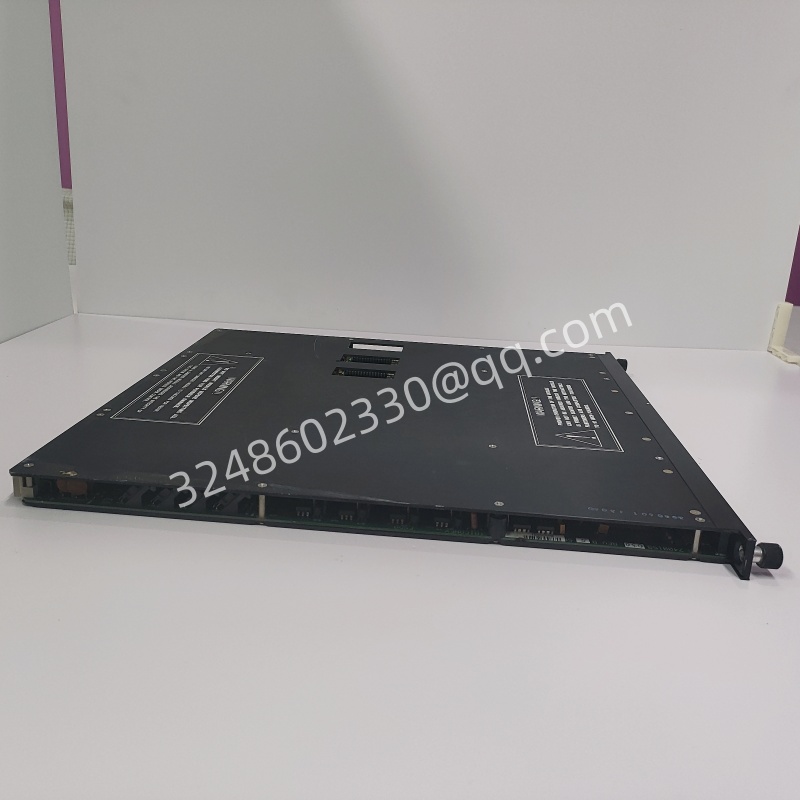
The TriconeX 3564 digital input module is a high reliability I/O component designed specifically for Triconex Safety Instrumented Systems (SIS), widely used in key industrial fields such as petroleum, chemical, power, and nuclear energy.
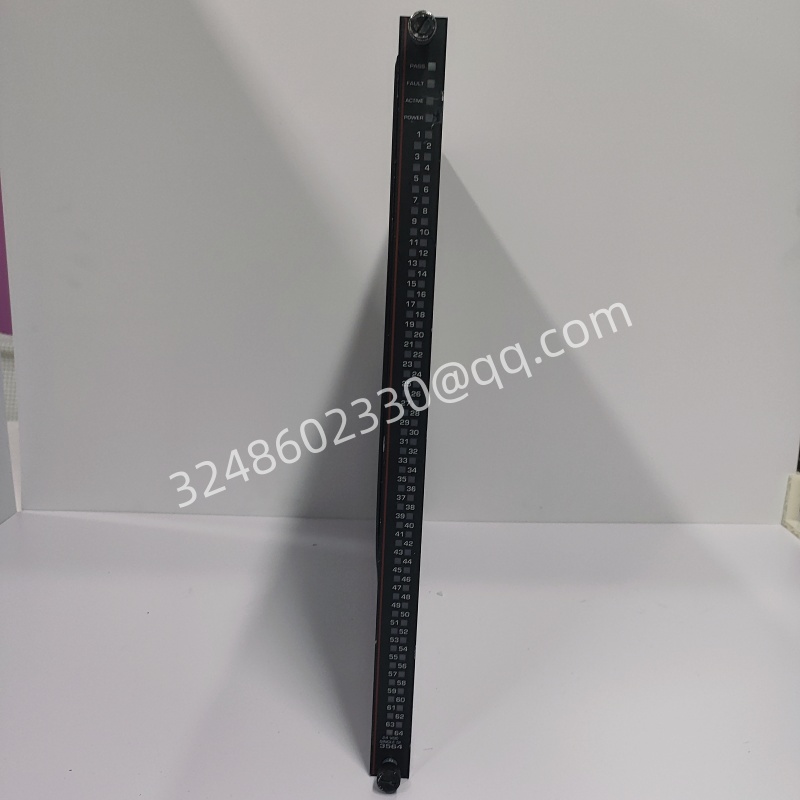
The following are the core features and technical parameters of this module:
Core Features
High security: Compliant with IEC 61508 standard, with triple module redundancy (TMR) design, suitable for high security applications such as SIL3/SIL4.
Optoelectronic isolation: All input channels adopt optoelectronic isolation technology, which can effectively prevent interference and ground loop potential difference from causing damage to internal circuits.
Self diagnosis and hot backup: supports self diagnosis function, can detect faults and alarm; Equipped with a “hot standby” function to ensure that the system can still operate normally in the event of a single component failure.
Modular design: Compact structure, easy to maintain, supports modular expansion, and can flexibly add or replace modules as needed.
Technical Specifications
Input channel: Depending on the version, it supports 16, 32, or 64 digital input points (commonly 32 points).
Power and Input: Rated input voltage of 24 VDC (some versions support 12 VDC), input current of 20 mA, input impedance of 10 k Ω.
Response time: usually less than 1ms, suitable for control scenarios that require quick response.
Working environment: The working temperature range is -40 ℃ to+70 ℃, suitable for harsh industrial environments.
Applicable scenarios
Process control: Collect digital signals such as limit switches and proximity switches to monitor the status of mechanical equipment in real time.
Safety control: As part of the safety instrumented system, it monitors key process parameters and triggers safety shutdown or alarm mechanisms.
Cross platform integration: Supports multiple communication protocols (such as Modbus, Profibus, OPC, RS-485, etc.), making it easy to integrate with other DCS or PLC systems.
There are no reviews yet.