


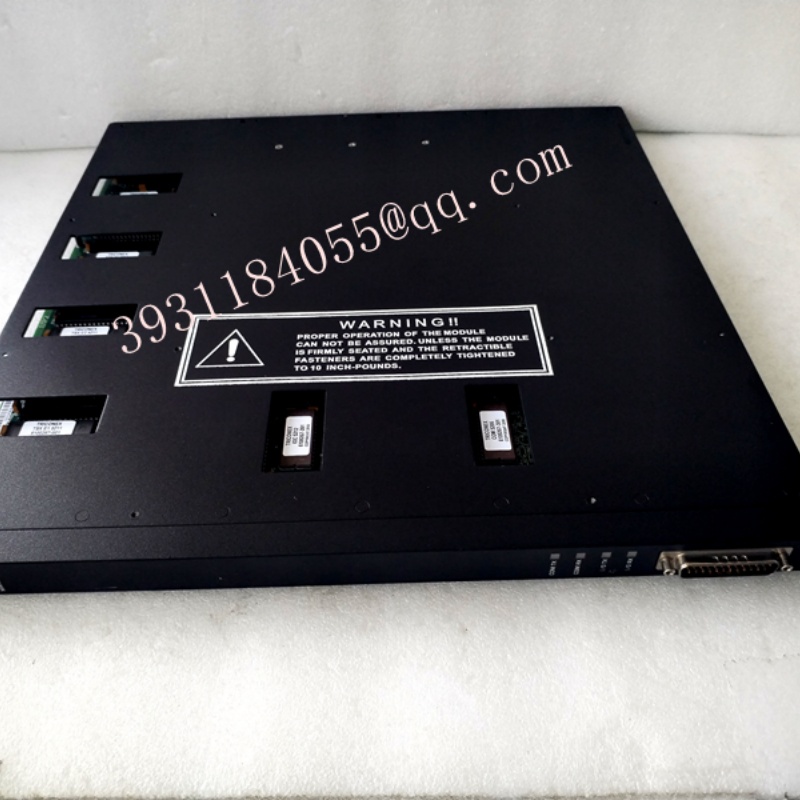
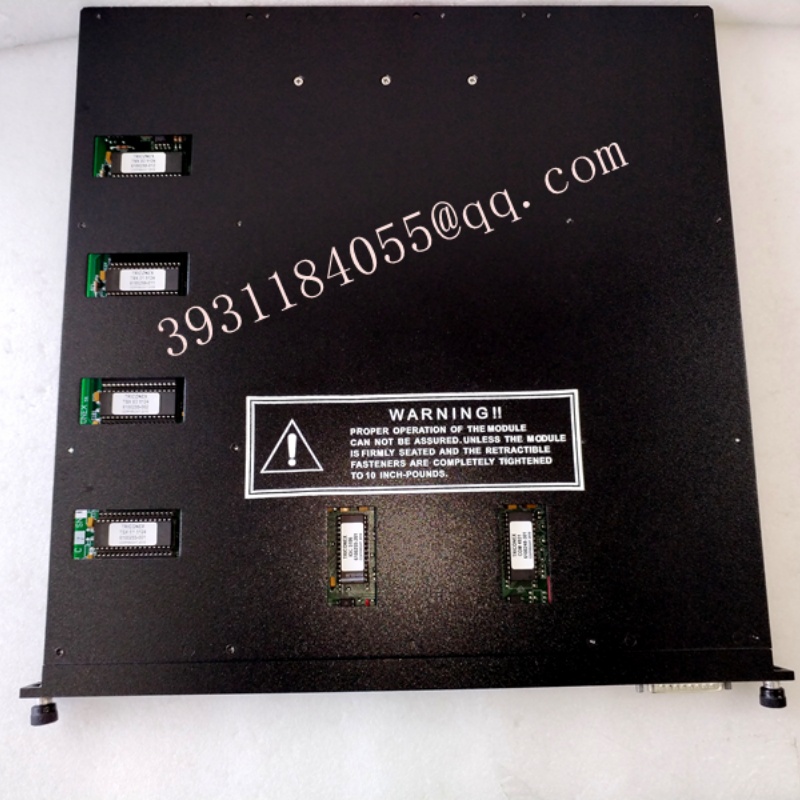
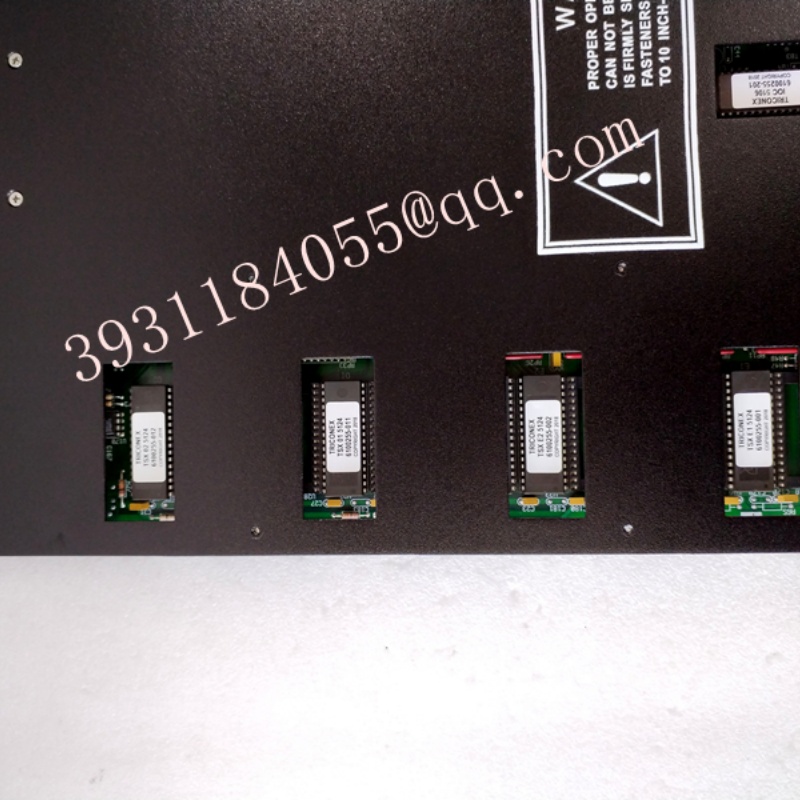
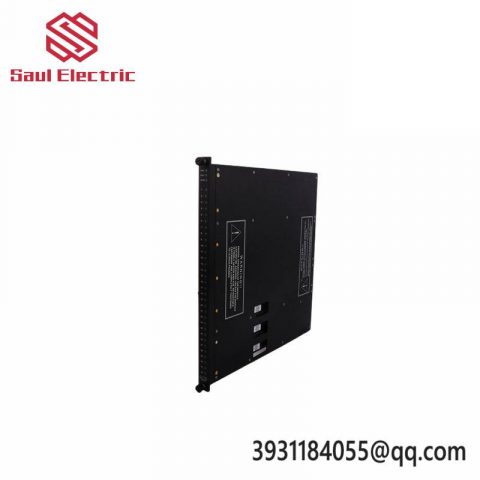
The TriconeX 3700A is a classic Triple Modular Redundancy (TMR) Main Processor module in the Triconex Safety Instrumented System (SIS) from Invensys (now Schneider Electric).
It is the core ‘brain’ of early Triconex systems (mainly V8 and V9 architectures), responsible for executing security logic, managing system communication, diagnosing system status, and coordinating the work of all input/output modules. Although there are currently more powerful V10 series processors (such as 3008/3009), the 3700A is still in service in a large number of outdated devices running worldwide.
The following is a detailed technical analysis of 3700A:
1. Core positioning and architecture
Role: As the central processing unit of the TMR system. A standard Triconex rack typically installs three 3700A modules that execute identical user programs in parallel.
Working Principle:
Three processors simultaneously read input data.
Independently perform logical operations.
Perform a “two out of three” (2oo3) vote before output to ensure that the system can still output the correct results even if one processor fails or data errors occur.
Applicable system: mainly used for Triconex V8 and V9 systems. It is typically installed in a dedicated main processor slot (usually the leftmost or specific position of the rack, depending on the backplane model).
2. Main technical specifications
Processor performance:
Based on the industrial grade microprocessor technology at that time (non modern multi-core architecture), the processing speed was relatively slow (millisecond scan cycles), but it was completely sufficient for traditional discrete logic and simple analog processing.
The memory capacity is relatively small (usually in the range of a few MB), used to store logical programs and a small amount of real-time data.
Communication interface:
Built in serial port: usually equipped with 2 RS-232 ports, used to connect to engineer workstations (for programming/downloading) or to connect to old-fashioned HMI/printers.
Communication Expansion: The 3700A itself has limited or no built-in Gigabit Ethernet interface (depending on the specific sub version), and usually requires communication modules (such as 4351, 4352, 4361, etc.) to be plugged into adjacent slots to achieve Modbus TCP/IP, Ethernet/IP, or high-speed communication with DCS.
Safety level: Designed to comply with IEC 61508 SIL 3 and AK 6 (T Ü V) certification standards.
Indicator lights: There are detailed LED indicators on the panel, including:
Run: Running status.
Fault: Hardware or software malfunction.
Comm: Communication activities.
I/O Active: I/O scan status.
Sync: The synchronization status between three processors (key indicator).
3. Differences from new models (such as 3008/3009)
table
Features 3700A (Classic) 3008/3009 (New Generation)
System Architecture V8/V9 V9 (3008)/V10+(3009)
Low processing capability, suitable for simple logic with high support for complex algorithms and big data recording
Communication capability relies on expansion module, low bandwidth, onboard multi gigabit Ethernet, high-speed
Programming software TriStation 1131 (old version, such as v3. x-v9. x) TriStation 1131 (new version, v10+)
Storage media volatile memory+battery/Flash large capacity SSD/Flash
The current situation has been discontinued, mainly relying on the spare parts market for sale, with mainstream configurations
4. Common application scenarios
Due to its long-term stable operation, the 3700A has been widely used in:
Refinery Emergency Shutdown System (ESD)
Control of natural gas pipeline compression station
Chemical process safety interlock
Boiler Burner Management System (BMS)
Turbine overspeed protection
Many factories built in the late 1990s to early 2010s are still using this model today.
5. Maintenance, replacement, and upgrade challenges
Due to the discontinuation of 3700A for many years, maintenance and replacement face special challenges:
Source of spare parts:
Official channels usually no longer offer full new products, relying mainly on refurbished parts or inventory spare parts.
When purchasing, it is necessary to strictly check the production date, firmware version, and appearance condition to avoid buying old electronic components that are about to expire.
Battery issue:
The 3700A typically has a battery inside for storing memory data. If the battery runs out and the system loses power, it may result in program loss (depending on whether the specific configuration has non-volatile storage). Pay attention to data backup when replacing modules.
Firmware matching:
The firmware version of the replaced 3700A module must be exactly the same as the other two existing processors in the system, otherwise it will cause a Sync Fault and the system cannot enter normal operation mode.
If spare parts with the same firmware version cannot be found, it may be necessary to perform an offline firmware upgrade on the system (which carries a high risk and requires professional engineers to operate).
Software compatibility:
Maintaining the 3700A system requires installing an older version of TriStation 1131 software (such as v7.0, v8.0, or v9.0). These old software may have compatibility issues when running on modern operating systems such as Windows 10/11, typically requiring virtual machines or dedicated old industrial computers.
Hot swappable risk:
Although it supports hot swapping, on such an outdated system, oxidation of backplane contacts or power fluctuations may cause unnecessary parking during the replacement process. It is strongly recommended to replace during the planned shutdown window, or to prepare sufficient emergency plans before replacement.
6. Upgrade suggestions
If your system is still using 3700A and facing the following situations, it is recommended to consider a system upgrade (Migration):
Spare parts are difficult to obtain or have extremely high prices.
The system frequently experiences occasional failures or synchronization errors.
Need to add complex control functions or integrate with modern IT systems such as cloud platforms and advanced analytics.
Original factory technical support has ended.
Upgrade path: Usually upgrading from V9 (3700A) to V10 (MP 3009) architecture. This requires replacing the main processor module, any necessary backplane adapters, communication modules, and recompiling and downloading logic programs.
summary
The TriconeX 3700A is one of the most successful main processors in Triconex’s history, safeguarding the safety of countless factories worldwide with its extremely high reliability. However, with technological iteration, it has entered the end of its lifecycle. For existing users, keeping spare parts reserves, regularly backing up programs, and monitoring battery status are key to maintaining stable operation; For long-term planning, migrating to the new generation V10 platform is a more secure choice.
| GEIS215VCMIH2CAIS200VCMIH2CAA |
| WAVECRESTDTS-2079 |
| SeidelMV65WKS-CE310/22PB |
| 504994880 |
| DSAI130 |
| PFTL101A1.0KN3BSE004166R1 |
| ICST8151B |
| GEIS220PSVOH1B |
| PFSK152 |
| GEDS200TBQDG1AFF |
| WOODWARD9907-164 |
| REXROTHMDD112D-N030-N2M-130GA0 |
| PP836A |
| HIEE300024R4UAA326A04 |
| CI871K01 |
| PIONEERMAGNDM3328B-6-1-3-E |
| GEIS220UCSAH1A |
| PM864A |
| PM864A |
| TERADYNEA1004-00003398-723-00 |
| UAA326A02 |
| TRICON3607E |
| FOXBOROCP40B |
| TRICON4500 |
| VIBROIOCN200-566-000-112 |
| ICSTRIPLEXT8151B |
| TRICON4101 |
| MOOGD138-002-001 |
| HIMAF8621A |
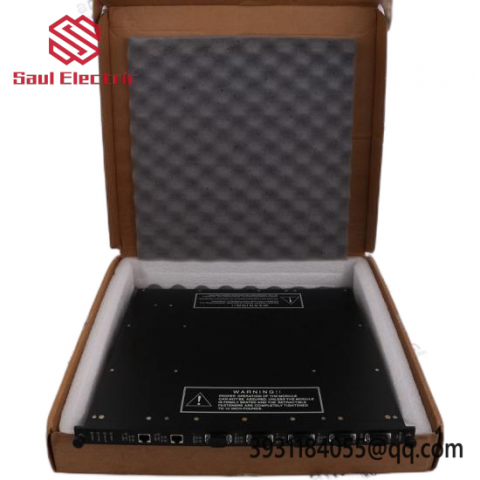
There are no reviews yet.