


| MP3101S2 |
| 4409Triconex |
| TRICONEX3009 |
| DECS-200-2C |
| 1600071-001 |
| TRICONEX3721 |
| 3704E |
| 3504E |
| 3604E |
| 3720 |
| 3101 |
| 3301 |
| 3401 |
| 3451 |
| 8310 |
| 8311 |
| 4351B |
| 3503E |
| 3625 |
| 8312 |
| 3351 |
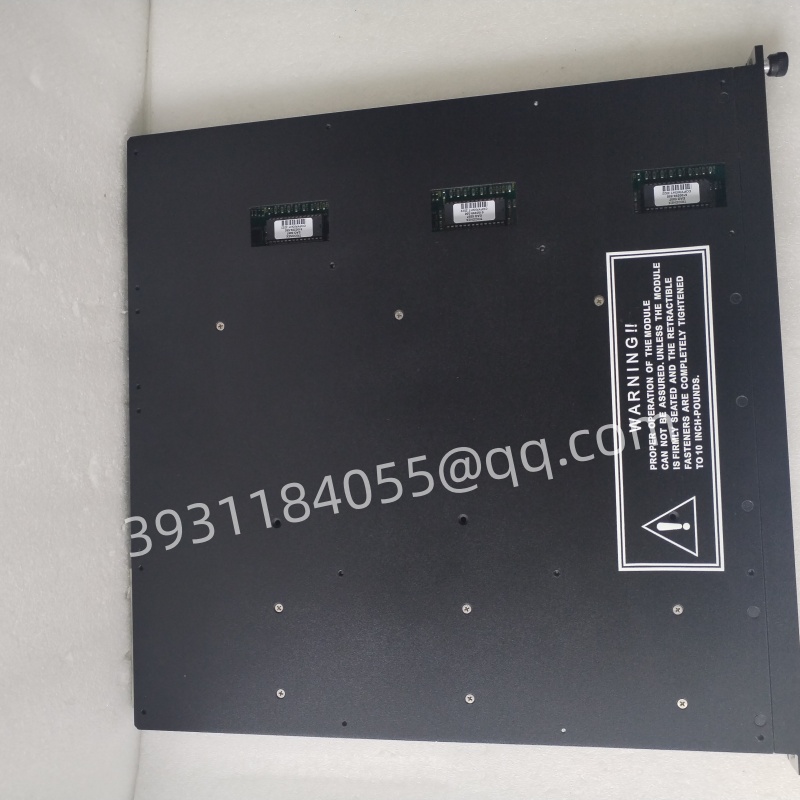
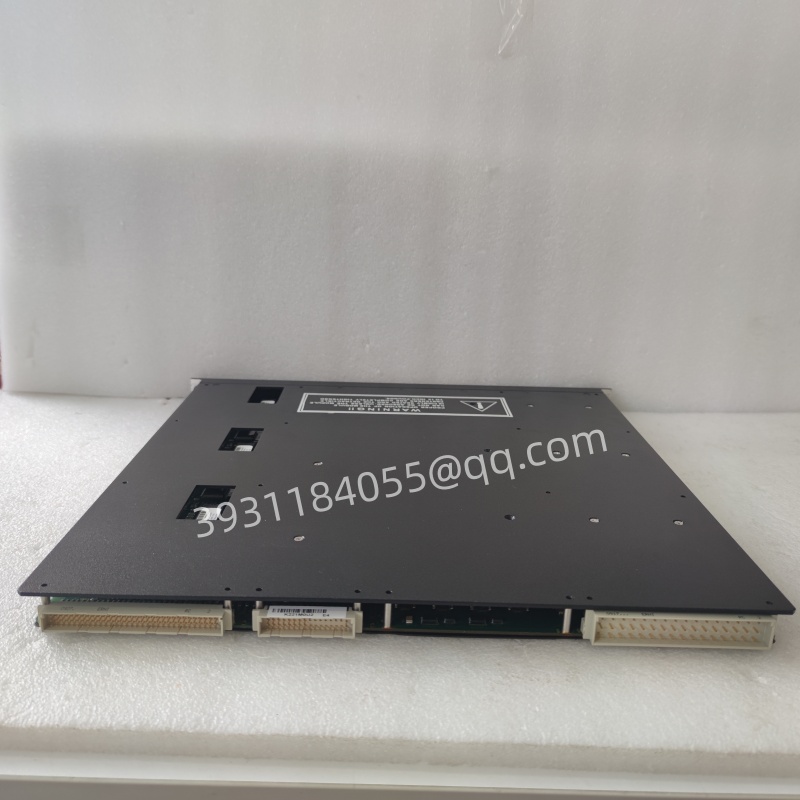
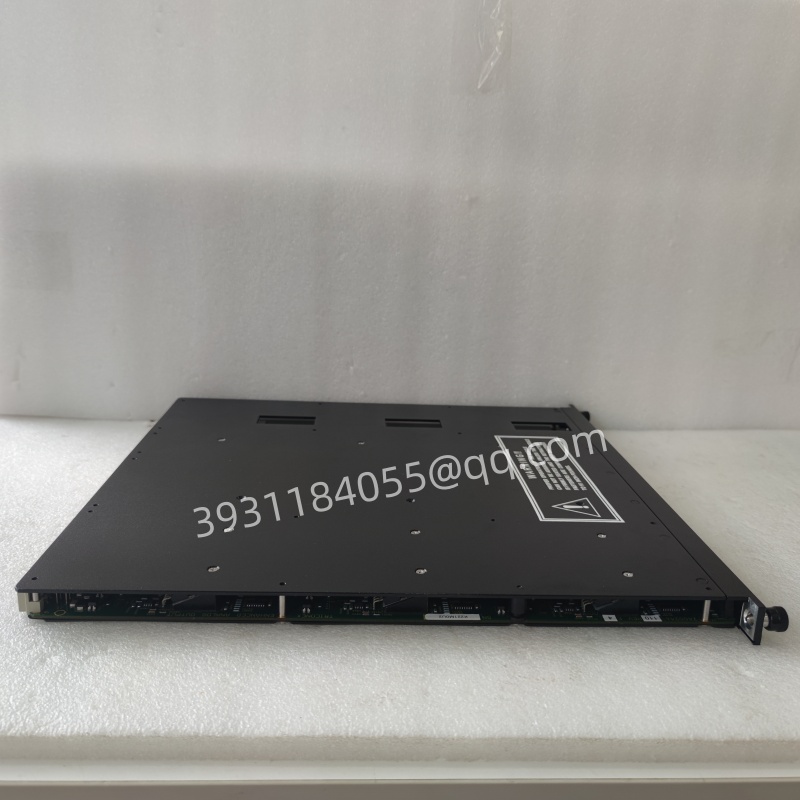
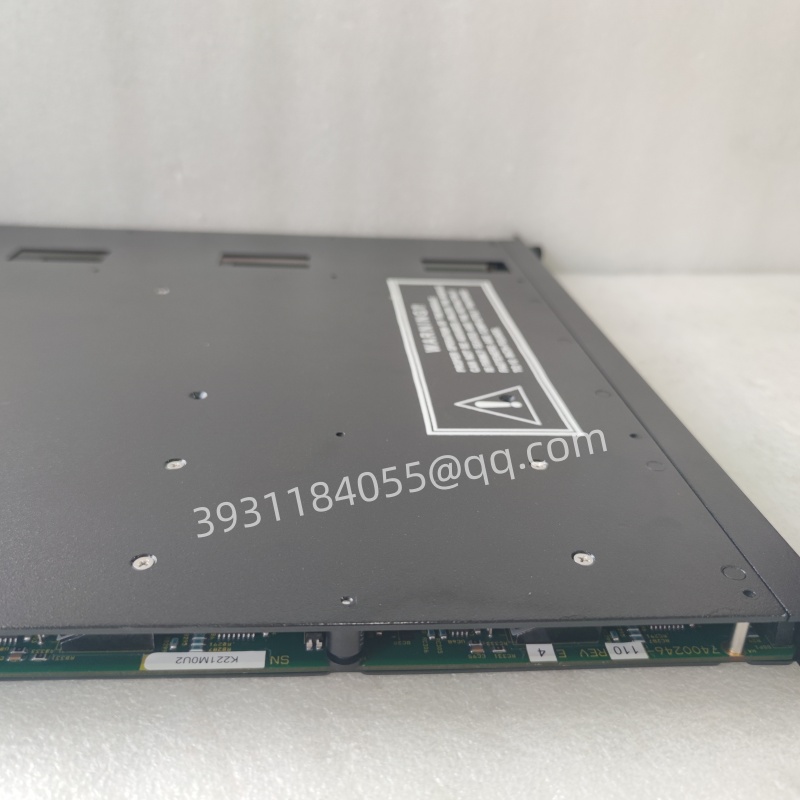
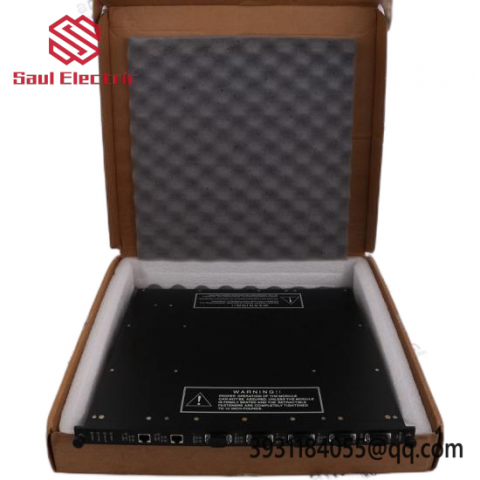
The Triconex 3805E is a 4-channel, triple module redundant (TMR) analog output module in Schneider Electric’s (formerly Invision) Triconex Safety Instrumented System (SIS).
The “E” in the model represents Enhanced. Compared to the old version of 38053805E, it provides more advanced diagnostic functions, higher accuracy, and better electromagnetic compatibility, designed specifically to meet the IEC 61508 SIL 3 safety level requirements. It is mainly used to convert the digital signal of the controller into a standard 4-20 mA current signal to drive the on-site regulating valve positioner, frequency converter speed setting, or other actuators that require analog control.
The following is a detailed technical analysis of 3805E:
1. Core functions and architecture
Triple Modular Redundancy (TMR):
The module contains three independent D/A conversion and output circuits.
The main processor sends three identical digital values, and the three channels inside the module are converted into analog currents.
Hardware voting and fault tolerance: If one channel detects its own fault (such as output drift or open circuit), it will automatically disconnect or set its output to a high impedance state, while the other two healthy channels will continue to maintain the correct 4-20 mA output through a “line and” or specific parallel mechanism (the specific mechanism depends on the internal circuit design, usually two channels can maintain full range output). This ensures that a single fault will not result in loss or error of control signals.
Analog output (AO):
Output standard industrial signal: 4-20 mA.
Supports two-wire or three wire wiring methods (usually used to drive intelligent valve positioners).
It has high-precision current source characteristics and can overcome changes in on-site line resistance.
Enhanced Diagnosis (The “E” Factor):
Point by point diagnosis: independently monitor the status of each channel.
Open circuit detection: It can detect whether the load circuit is disconnected (broken wire) and immediately report to the controller.
Short circuit protection: detects output short circuits to ground or power, and protects the internal circuit of the module.
Range check: Monitor whether the output current exceeds the physical limit of 4-20 mA (such as<3.6 mA or>22 mA).
Internal reference voltage monitoring: Ensure the accuracy of the D/A conversion reference.
2. Technical specifications (typical parameters)
Number of channels: 4 independent analog output channels.
Attention: Due to the complexity of analog processing and the need for high-precision isolation, its density is much lower than that of digital modules (such as 3721 with 32 points).
Output signal: 4-20 mA (configurable range typically covers 0-24 mA to support diagnostic lower limit).
Load capacity:
Maximum load resistance: Typically, it can reach 600 Ω -750 Ω under 24V power supply (depending on the supply voltage and temperature, please refer to the manual for confirmation). This means it can drive long-distance cables or multiple series connected devices as long as the total impedance is within the range.
Accuracy:
Typical accuracy: ± 0.1% FS (full scale) or better.
Resolution: typically 12-14 bits or higher to ensure smooth valve control.
Response time:
The transition from digital to analog stability typically occurs in the 10ms-50ms range, which is sufficient to meet the needs of most process controls such as anti surge control and liquid level regulation.
Isolation:
Optoelectronic isolation between channels and logic backboards.
Channels are usually isolated from each other to prevent the failure of one circuit from affecting other circuits.
power supply
Logic power supply: provided by the backplane (5V/24V).
Field Power: 24V DC power must be provided externally to the module’s dedicated terminals for driving 4-20 mA circuits.
3. 3805E vs 3805 (Basic Edition)
Diagnostic depth: 3805E can provide more detailed fault codes (such as distinguishing between load open circuit and internal circuit faults), while 3805 may only report general faults.
Safety: The 3805E has passed the updated SIL 3 certification, and its fail safe mechanism is more reliable.
Compatibility: 3805E is better compatible with Triconex v10 and v11 system firmware.
Suggestion: In new projects or spare parts replacement, be sure to choose 3805E.
4. Application scenarios
Regulating valve control: an intelligent locator that drives pneumatic regulating valves to achieve precise opening control (such as flow control, pressure control).
Emergency shut-off valve (partial): Although ESD valves are mostly on-off valves, proportional relief valves under certain special operating conditions require analog control.
Variable frequency drive control: As the ultimate means of executing the safety system, it forcibly reduces the motor speed or stops the machine through a 4-20 mA signal.
Recorder/DCS interface: Send critical process variables (values obtained through logical operations) of the safety system to non safety DCS systems for recording or display (attention should be paid to signal isolation and grounding loop issues).
5. Key points of wiring and configuration
Wiring method:
Removable terminal blocks are usually used.
Two wire connection method: The module provides the positive pole of the power supply (or through external distribution), and the current flows through the load back to the negative pole (or common terminal) of the module.
Three wire connection method: separating signal lines, power lines, and ground lines, commonly used for certain specific locators.
Shielding grounding: Analog signals are highly susceptible to interference, and the cable shielding layer must be well grounded at the single end of the cabinet side.
Software configuration (TriStation 1131):
Range setting: Define the engineering units corresponding to 4 mA and 20 mA in the software (such as 0-100% opening, 0-10 Bar).
Fail Safe Direction:
Downscale: When a fault occurs, output<4 mA (such as 3.6 mA) to fully close or fully open the valve (depending on the locator settings). This is the most common security strategy.
Upscale: Output>20 mA in case of malfunction.
Hold Last: Maintain the current output value in the event of a fault (only used in specific non safety or highly redundant scenarios, SIL 3 applications require caution).
Damping time: The output filtering time can be set to prevent signal fluctuations from causing frequent valve actions.
6. Maintenance and troubleshooting
Indicator light status:
OK: A constant green light indicates normal operation.
Fault: Red indicates module or channel failure.
Channel LEDs: Indicate the status of each channel (normal, open circuit, over limit).
Common faults:
Open circuit alarm: Check whether the on-site cables are broken, whether the wiring terminals are loose, and whether the load equipment (locator) is damaged.
Output inaccuracy: Check if the grounding is good (if there is a ground potential difference), check if the external 24V power supply is stable, and perform software calibration if necessary.
Valve not operating: Confirm if the output current is normal, check if the locator is in “manual” mode or if the air source is normal.
Hot swappable: supports online replacement. After replacement, the new module will automatically download configuration and calibration parameters.
Attention: At the moment of replacement, the output of this channel may experience brief fluctuations. For critical control circuits, it is recommended to perform maintenance at the maintenance window or switch the circuit to manual/bypass mode first.
7. Summary
The Triconex 3805E is a high-performance and highly reliable 4-channel TMR analog output module. It is a key bridge connecting the safety controller with the on-site simulation actuator (mainly the regulating valve).
There are no reviews yet.