


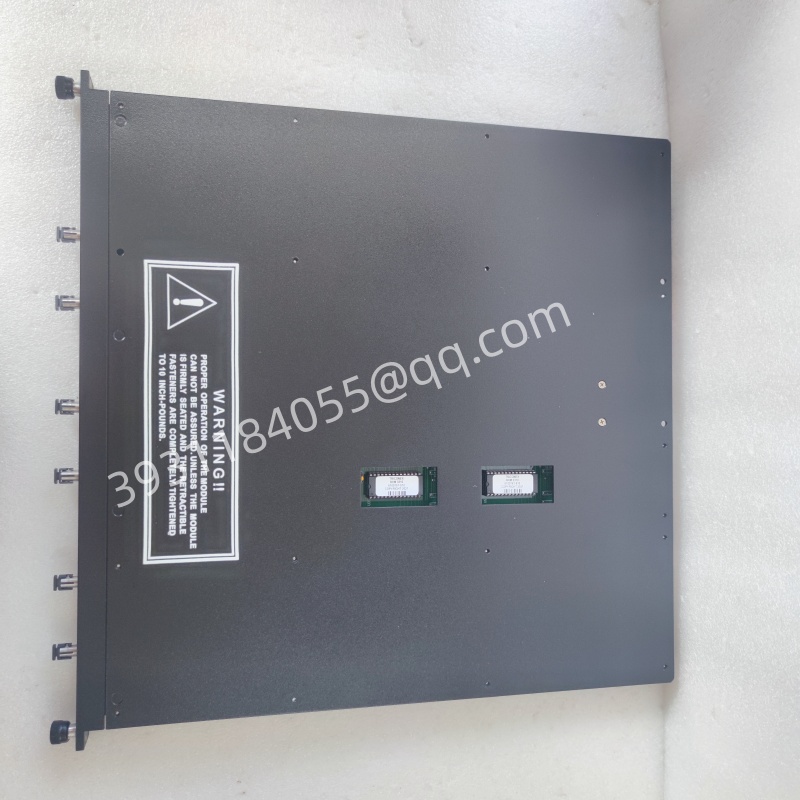
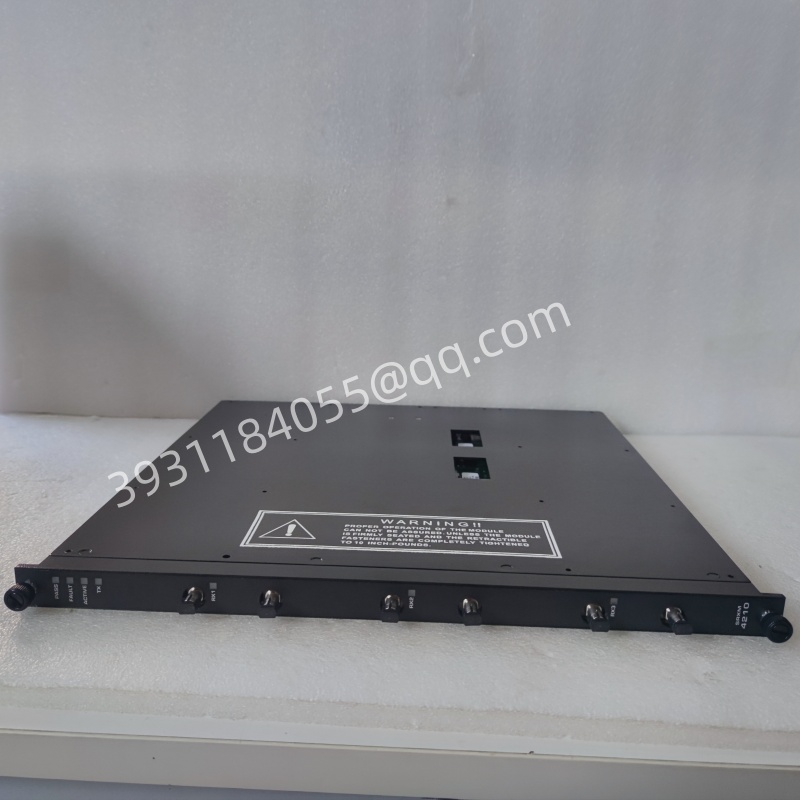
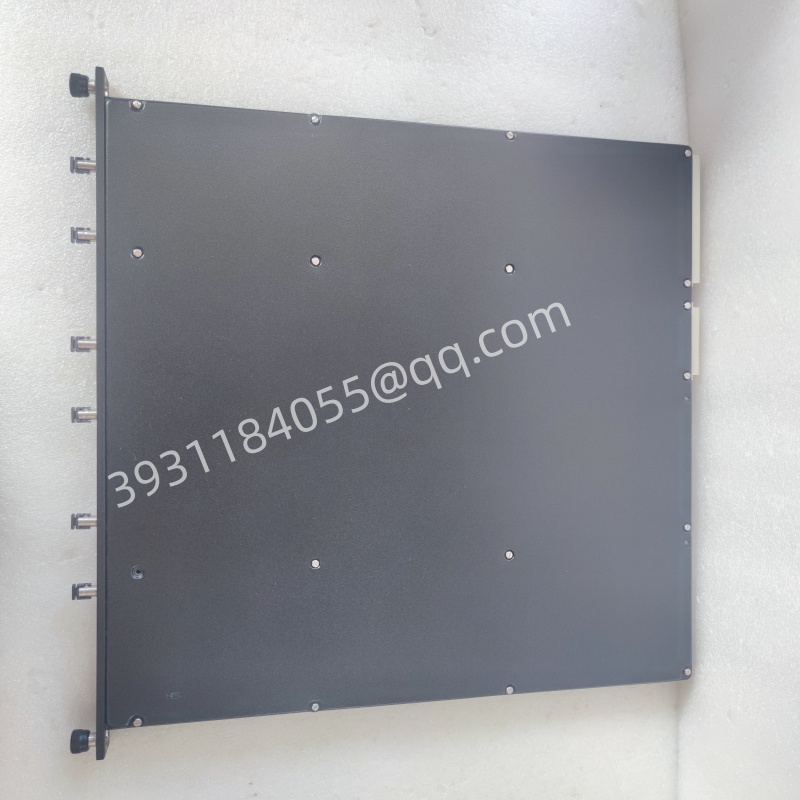
The Triconex SRXM 4210 is a new generation Safety Remote Expansion Module launched by Schneider Electric (formerly Envision), which is a core component of the Triconex SRM (Safety Remote Module) series.
It represents a major innovation in the Triconex system architecture, aimed at addressing the pain points of traditional distributed I/O systems in long-distance transmission, wiring costs, and system flexibility. Unlike traditional local rack expansion, the SRXM 4210 allows for the placement of safety I/O modules away from the main controller (such as MP 3009/3101), communicating via high-speed Ethernet while maintaining TMR (Triple Modular Redundancy) safety integrity level (SIL 3).
The following is a detailed technical analysis of SRXM 4210:
1. Core positioning and architectural innovation
Role: It is the main control module of the remote rack. In a remote site, an SRXM 4210 must be installed as the “brain” responsible for managing all other I/O modules (such as digital input/output, analog modules, etc.) on the rack.
Communication architecture:
Communicate with the main processor via Gigabit Ethernet.
Support Ring Topology: Multiple remote racks can be connected hand in hand to form a fiber optic or copper cable ring network. If a cable in the ring network breaks, communication will automatically bypass from the other side to ensure high availability.
Redundancy mechanism:
Although a single SRXM 4210 module itself is not a two out of three (3 modules in parallel) like the main processor, its communication link with the main controller is redundant.
The local I/O modules it manages (such as 3504E, 3664, etc.) still maintain the TMR architecture, ensuring the safety of on-site control.
The entire system (main controller+network+remote rack) complies with SIL 3/AK 6 certification as a whole.
2. Main technical specifications
Communication interface:
2 or 4 Gigabit Ethernet ports (depending on the sub model, typically used to build ring or star connections).
Supports fiber optic cables (SFP) or copper cables (RJ45), with fiber optic transmission distances up to several kilometers, making it ideal for large factories such as refineries and long-distance pipelines.
Compatible I/O modules:
SRXM 4210 is compatible with standard Triconex v10/v11 series I/O modules.
This means that you can directly use familiar modules such as 3664 (DO), 3504E (DO), 3708 (DI), 3721 (old compatibility needs to be confirmed) on remote racks without learning new wiring methods.
Capacity:
A single remote rack typically supports 14-16 I/O slots (depending on the chassis model, such as an 8-slot or 16 slot chassis).
A main controller can mount multiple remote racks (the specific number is limited by network bandwidth and scanning cycles, usually up to dozens of racks).
Environmental adaptability:
Wide working temperature range, suitable for installation in safe areas outside of on-site instrument rooms or explosion-proof zones.
Has strong resistance to electromagnetic interference (EMC).
3. Advantages compared to traditional architecture
table
Features: Traditional Expansion (Local Rack/Fiber Optic Expansion) SRXM 4210 (New Remote Expansion)
Transmission distance short distance (usually<100 meters, relay required) long distance (kilometer level, via fiber optic)
The wiring cost requires a large amount of expensive specialized optical/copper cables to be pulled back to the central control room using the on-site LAN, significantly reducing the need for pullback cables
The topology structure is mainly star shaped, with poor scalability and support for flexible ring network, star shaped, and chain topology
The installation location must be close to the main controller and can be dispersed and installed in the field mounting area
Basic diagnostic ability, enhanced network diagnosis, and link status monitoring
The system size is limited by the backplane slots and distance, and can be easily expanded to thousands of I/O points
4. Typical application scenarios
Large scale integrated refining and chemical base: The device area is huge, and the I/O cabinet is directly installed on site, connected to the central control room through a fiber optic ring network, saving hundreds of kilometers of signal cables.
Long distance pipeline stations: Pump stations and valve chambers are distributed in different geographical locations and connected through wide area networks or dedicated optical fibers.
Offshore platforms: Space is precious, and I/O needs to be distributed on different decks or modules to reduce weight and wiring complexity.
Brownfield renovation: When adding new units to an existing factory, there is no need to re lay long-distance cables back to the old control room, only the nearby fiber optic ring network needs to be connected.
5. Key points of configuration and maintenance
Network planning:
Ethernet topology must be carefully designed (dual ring network is recommended for maximum redundancy).
Network load and scanning cycle need to be calculated to ensure that communication delay in emergency situations (triggered by ESD) is within the allowable range (usually<10-20ms).
Software configuration:
Use the latest version of TriStation 1131 (v11 or higher) for configuration.
The software needs to define the physical location, IP address, ring network path, and connected I/O module type of the remote rack.
Indicator light status:
Link/Act: Display the connection and activity status of Ethernet ports.
Status: Overall health status of the module (green/red/yellow).
Module Status: Displays the status of the local I/O modules it manages.
Security
Communication data is encrypted and integrity verified to prevent data tampering or loss.
Equipped with “network disconnection protection” function: If communication with the main controller is interrupted, the remote rack can enter a safe state (trip) or maintain the final state (depending on application requirements) according to preset strategies.
6. Precautions
Firmware matching: The firmware version of SRXM 4210 must strictly match the main controller (MP 3009/3101) and TriStation software version.
Switch requirements: If an external switch unit is used to build a ring network, it is necessary to ensure that the switch supports Fast Spanning Tree Protocol (RSTP) or a dedicated industrial ring network protocol, and meets SIL related time synchronization requirements. But in the Triconex SRM architecture, it is usually recommended to directly use a direct link network between modules to reduce intermediate device failure points.
Power Supply: The remote rack requires an independent, high-quality 24VDC power supply and is equipped with UPS to ensure safe operation in the event of a power outage.
summary
The Triconex SRXM 4210 is a key product for the Triconex system to move towards digitization, networking, and distribution. It breaks the physical distance limitations of traditional safety systems, allowing engineers to build large-scale safety instrumented systems in a more flexible and economical way without sacrificing any safety (maintaining SIL 3).
For newly built large-scale projects or factories that require large-scale expansion, using a remote architecture based on SRXM 4210 is usually the best choice.

There are no reviews yet.